


Making People Uncomfortable
- bordenmscott
- May 4, 2022
- 9 min read
Do your religious beliefs bring about good in the world, or do they cause harm?
I’m pretty sure just about anyone reading this is confident that their faith is a source of good. But how should we live in a culture where more and more people disagree?
A new survey by the Angus Reid Institute on the religious views of Canadians was released not long ago. Among other things it tells us that there are growing number of Canadians today who think that faith does more harm than good. And the numbers get much worse when people are asked about certain faith groups - including mine.

Ashleigh Stewart of Global News wrote a reasonably detailed summary of some of the results of this study, mixed with some video segments, that you can find here.
We didn’t coordinate it, but when Art Crawley filled in for me two Sundays ago he referenced this same study and offered some helpful reflections on what it might mean to live in a world where it’s less and less strange to find that identifying with Jesus causes you trouble. You can catch up on that message here if you missed it.
By The Numbers
For anyone interested in some of the details there are a few big take-aways from this study. Some are not surprising. Religiosity is at an all-time low. Fewer and fewer people identify with a particular faith tradition. This is the first time since 1985 that the number of Canadians who say they have no religious affiliation has dropped below 70%.
Nearly half of Canadians are now in the category of “spiritually uncertain.” Many believe in God, some believe in a higher power of some kind, but there are few firm convictions and little religious activity among this group.
Within different faith groups the number of people who are active (those with strong beliefs who worship regularly and participate in their faith communities) continues to decline as well. Today about 16% of Canadians are “religiously committed.”
This continues a long-standing trend. Canada is becoming less religious overall, particularly among the youngest generations.
That’s not good news, but the numerical decline is not my emphasis today. Instead I want to reflect about the growing discomfort that Canadians have with religion overall.
Damaging Beliefs
According to Angus Reid if you ask a bunch of Canadians whether they think the good religion brings about in society outweighs the bad about half (47%) will say that it’s about even. Your typical Canadian thinks that religion is a wash - it brings good and bad in equal amounts into our society.
But what about the other half? Well, there are still more (31%) who think that religious communities bring about more good than harm, compared to the 22% who think that religion is a net negative for society.
But the news is much worse for certain religious groups. Canadians are far more likely to think that two groups have damaging beliefs: Muslims, and Evangelical Christians.
In the study various denominations were lumped together as “Evangelical Christianity”, including Baptists, Pentecostals, Mennonites, Wesleyans, and others. And “Evangelical Christianity” had the distinction in the survey of being the only religious group that was seen as more damaging than beneficial by every other self-identified religious group.
That’s right - it’s not just Canadians as a whole who feel negatively about this group (which includes Baptists). All other religious groups also think that “Evangelicals” do more harm than good.
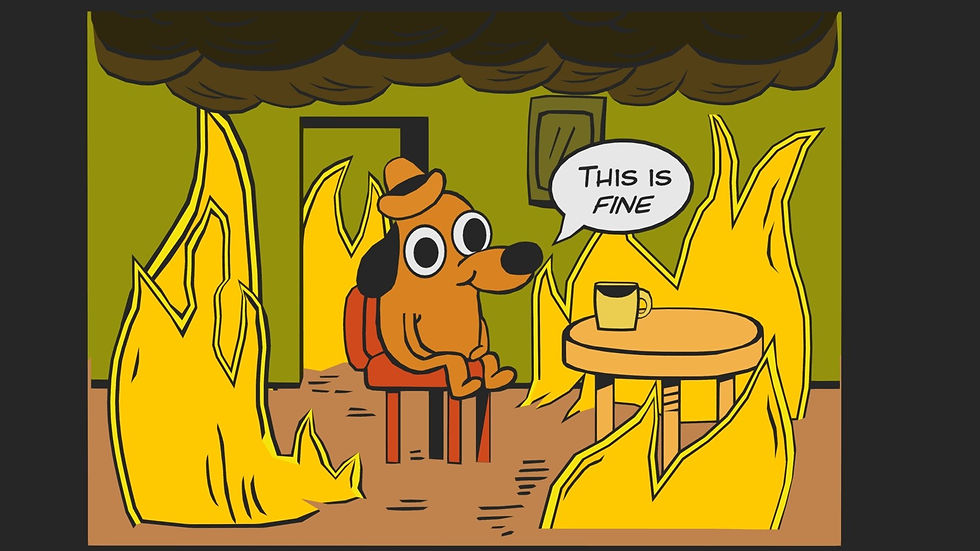
So, here I am, a Baptist minister, living in a society where the average person is increasingly likely to hold the opinion that what I believe and try to encourage others to believe is damaging. Even most other religious people think I’m playing for a team that is making the world worse. What do I do with that information?
“Evangelical” Means What?
The first thing worth pointing out is that this study defined “Evangelicals” as being certain Christian denominations with common characteristics.
If you ask the Evangelical Fellowship of Canada what Evangelicals are they list four characteristics.
Biblicism: Devotion to the Bible as God's word;
Crucicentrism: The centrality of the cross of Christ in evangelical teaching and preaching;
Activism: Cooperating in the mission of God through evangelism and charitable works;
Conversionism: The conviction that each person must turn from their sin, believe in the saving work of Christ, and commit themselves to a life of discipleship and service.
That’s a good historic definition. But it’s not what most of the people responding to this survey were thinking when they said that they thought Evangelicals were doing more harm than good. I suspect many were thinking of examples from the news of certain Canadian churches that defied pandemic restrictions, or of the American political form of “Evangelicalism” that is now more associated with Donald Trump and conspiracy theories than it is with Jesus in many people’s minds.

I stopped using the term “Evangelical” to describe where I fit in the family of Christians years ago because of the immediate negative association it has for people outside the Church. It’s a shame, but I’m not sure the word is redeemable, at least not in North America. “Evangelical” is now tied to power, politics, and specific positions on cultural issues.
So I don’t take it too personally when people express concern about “Evangelicals”, because I know what they actually mean. But it does make it hard to quickly tell someone what kind of Christian I am today. More and more, I’m going to find myself lumped in with these forms of “Evangelicalism” in many people’s minds, which can be a barrier to being a positive witness for Christ.
If Christians who fit the traditional Evangelical definition want to reach others with the Gospel message and be a blessing in their communities they will need to think about how they can defy people’s negative expectations. Our Christian identity does not necessarily inspire trust or respect - we need to be mindful that it is more and more likely to cause discomfort and suspicion instead. An abundance of grace, love, and patience will be required. That’s OK, because Jesus already calls us to grow these fruit of the Spirit, but if anyone has been underestimating their importance it’s time to get serious.
Scared of Commitment
Speaking of getting serious, one other thing that struck me is that the two groups that Canadians are more uncomfortable with - Evangelicals and Muslims - were also the two groups that had the most “religiously committed” members.
That makes sense to me. People who identify with a religion but aren’t very committed mostly think and act like everyone else. Their somewhat-dormant beliefs don’t cause tension in society.
But “religiously committed” people care more about their faith than fitting in to the culture around them. They might think very differently than the majority on certain subjects, and in our culture today simply thinking differently on some subjects (especially in the realm of abortion or sexual ethics) can be seen as deeply offensive or threatening.
I think modern Canadian culture is OK with religious people so long as those religious beliefs are tame. Nothing too serious or non-negotiable, nothing that stands against the direction our culture is trying to go. Dress a little differently, have some interesting rituals and practices that you mostly keep to yourself, sure. That’s fine. But faith that compels someone to stand apart from the crowd is less welcome.
I don’t see a lot of value in being religious but uncommitted as far as Christian faith is concerned. We’re talking about following Jesus here, and He taught things like:
“If anyone comes to me and does not hate father and mother, wife and children, brothers and sisters—yes, even their own life—such a person cannot be my disciple. And whoever does not carry their cross and follow me cannot be my disciple.”
“For whoever wants to save their life will lose it, but whoever loses their life for me will save it. What good is it for someone to gain the whole world, and yet lose or forfeit their very self?”
“Therefore go and make disciples of all nations, baptizing them in the name of the Father and of the Son and of the Holy Spirit, and teaching them to obey everything I have commanded you.”
Some people may still be spiritually seeking, and I know others may be struggling with the institutional Church in one way or another. But, in general, an uncommitted or inactive Christian is a contradiction. Worship, Christian community, and service to others are vitally important. These things shape and form us. They cause us to stand apart from the rest of the world in what should be healthy and valuable ways. And if you don’t feel out of step with the culture around you in certain ways as a Christian that’s usually not a good sign.
How Then Shall We Live?
One scholar summing up the results of this recent study remarked that Canadians are not intolerant of religion (yet), but they are increasingly uncomfortable with religion.

So how should Christians live out their faith in response?
I think the simple answer is that we need to be much more serious about learning from the early Christians in the New Testament and much less invested in how our parents and grandparents lived at a time when Christianity was more normal, or culturally dominant.
The Church began in a culture that wasn’t just uncomfortable with them, it was openly hostile. Christians were disowned, imprisoned, and killed. Identifying themselves with Jesus was costly, but they considered it to be utterly worth it. Jesus was their hope, their joy, and the only security they needed. How did they try to live in that world? By building deep bonds of love with one another, by serving, praying, and sharing, and even by enduring hardship and seeking to bless their persecutors.
Romans 12:9-19;21
Love must be sincere. Hate what is evil; cling to what is good. Be devoted to one another in love. Honor one another above yourselves. Never be lacking in zeal, but keep your spiritual fervor, serving the Lord. Be joyful in hope, patient in affliction, faithful in prayer. Share with the Lord’s people who are in need. Practice hospitality.
Bless those who persecute you; bless and do not curse. Rejoice with those who rejoice; mourn with those who mourn. Live in harmony with one another. Do not be proud, but be willing to associate with people of low position. Do not be conceited.
Do not repay anyone evil for evil. Be careful to do what is right in the eyes of everyone. If it is possible, as far as it depends on you, live at peace with everyone… Do not be overcome by evil, but overcome evil with good.
None of us is going to single-handedly change the numbers in the next big study of the attitudes that Canadians have about religious faith or “Evangelical Christians”. But you could nudge the numbers among people who know you. Do they see you as someone who makes Jesus look good because of your love, joy, graciousness, or the some of the other Christlike qualities followers of Jesus should have?
Faithfulness to God may not endear people to us on some issues. But Christlike character should earn the interest and respect of those in our sphere of influence. The world is watching, skeptically. I don't know about you, but I'd like to be a Christian who defies today's expectations.
Devotional Readings
Psalm 31:1-5
In you,Lord, I have taken refuge;
let me never be put to shame;
deliver me in your righteousness.
Turn your ear to me,
come quickly to my rescue;
be my rock of refuge,
a strong fortress to save me.
Since you are my rock and my fortress,
for the sake of your name lead and guide me.
Keep me free from the trap that is set for me,
for you are my refuge.
Into your hands I commit my spirit;
deliver me, Lord, my faithful God.
1st Peter 3:8-16
Finally, all of you, be like-minded, be sympathetic, love one another, be compassionate and humble. Do not repay evil with evil or insult with insult. On the contrary, repay evil with blessing, because to this you were called so that you may inherit a blessing. For,
“Whoever would love life
and see good days
must keep their tongue from evil
and their lips from deceitful speech.
They must turn from evil and do good;
they must seek peace and pursue it.
For the eyes of the Lord are on the righteous
and his ears are attentive to their prayer,
but the face of the Lord is against those who do evil."
Who is going to harm you if you are eager to do good? But even if you should suffer for what is right, you are blessed. “Do not fear their threats; do not be frightened." But in your hearts revere Christ as Lord. Always be prepared to give an answer to everyone who asks you to give the reason for the hope that you have. But do this with gentleness and respect, keeping a clear conscience, so that those who speak maliciously against your good behavior in Christ may be ashamed of their slander.
Prayer (From Martin Luther)
Behold, Lord, an empty vessel that needs to be filled. My Lord, fill it. I am weak in the faith; strengthen me. I am cold in love; warm me and make me fervent that my love may go out to my neighbor. I do not have a strong and firm faith; at times I doubt and am unable to trust you altogether. O Lord, help me. Strengthen my faith and trust in you.
Amen.
Bonus Material
If you want to know a little more about the history and current state of "Evangelicalism" here's a very accessible video from an American perspective.


Comments